
Interactive Reference Guide
The Beginner's Guide to Peptides
A complete reference covering 17 compounds, reconstitution math, protocol design, COA literacy, and an embedded dosing calculator.
Why This Guide Exists
If you have spent any time researching peptides, you already know the problem. The information exists. There is no shortage of it. What there is a shortage of is information that is organised, honest about what is known and what is not, and written for someone who takes their research seriously rather than someone chasing a shortcut.
This guide was written for the person who has done enough reading to know that peptides are worth understanding properly, but who has not yet found a single resource that pulls it all together without an agenda. No affiliate links. No brand partnerships. No claims beyond what the research actually supports.
The guide is structured to be read front to back on the first pass, then used as a reference you return to. The compound library in Chapter 3 is designed for repeated consultation. The embedded calculator handles the reconstitution math automatically. The sourcing and COA chapter gives you the tools to evaluate any vendor independently.
What Peptides Are
A peptide is a short chain of amino acids linked by peptide bonds. Proteins are also chains of amino acids, but they are typically much longer and fold into complex three-dimensional structures. Peptides are smaller, usually between 2 and 50 amino acids, and this smaller size gives them properties that make them useful as research compounds: they can be synthesised precisely, they tend to be highly specific in their biological activity, and they are generally metabolised and cleared by the body relatively quickly.
How Peptides Work
Most research peptides work by binding to specific receptors on cell surfaces and triggering a cascade of downstream effects. Because the binding is highly specific, a well-designed peptide can produce a targeted effect with relatively little off-target activity. This specificity is one of the key reasons peptides have attracted significant research interest as potential therapeutic agents.
Different peptides work through fundamentally different mechanisms. Growth hormone secretagogues stimulate the pituitary gland to release growth hormone. Repair peptides like BPC-157 work through angiogenesis and growth factor upregulation. Metabolic peptides like Retatrutide work through receptor agonism in the gut-brain axis. Understanding the mechanism of a compound is essential for understanding both its potential applications and its limitations.
The Regulatory Landscape
Peptides occupy an unusual regulatory position. Most peptides discussed in this guide are classified as research chemicals in most jurisdictions. They are not approved for human use by regulatory bodies such as the FDA or EMA. They are sold legally as research compounds for laboratory use. This classification has practical implications for sourcing, quality control, and the nature of available evidence, all of which are covered in later chapters.
How to Read the Evidence
Much of the peptide research base consists of animal studies, in vitro experiments, and small human trials. This does not make the research worthless, but it does require calibrated interpretation. When reviewing a study, pay attention to the model used (rodent vs. human), the dose (animal doses often do not translate directly), the endpoint measured, and who funded the research.
| Evidence Level | Description | Weight |
|---|---|---|
| RCT (human) | Randomised controlled trial in humans | Highest |
| Observational (human) | Human data without randomisation | Moderate |
| Animal study | Rodent or other animal model | Indicative |
| In vitro | Cell culture experiments | Mechanistic only |
| Anecdotal | Forum reports, case studies | Lowest |
Reconstitution, Dosing, and Administration
This is the chapter most beginners need most urgently. The mechanics of reconstitution and dosing are not complicated once you understand the logic, but the consequences of getting them wrong range from wasting an expensive vial to a more serious miscalculation. Read this chapter carefully before handling any compound.
What You Need
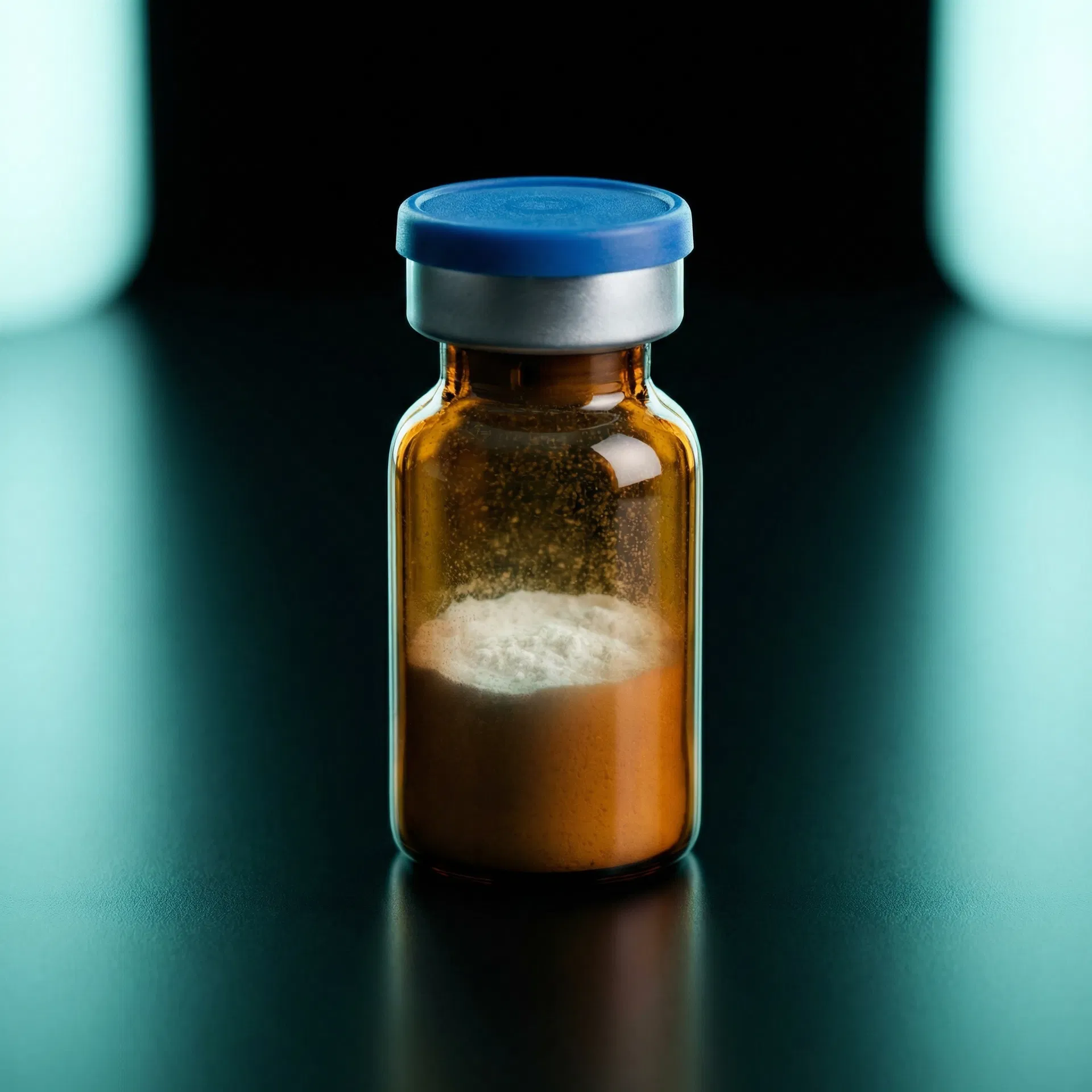
To reconstitute a lyophilised (freeze-dried) peptide, you need: the peptide vial, bacteriostatic water (bac water), a sterile syringe for reconstitution, insulin syringes for administration, alcohol swabs, and a clean surface. Bacteriostatic water contains 0.9% benzyl alcohol, which prevents bacterial growth and extends the shelf life of your reconstituted solution. Do not substitute sterile water or saline for long-term storage.
The Reconstitution Process
Swab the rubber stopper of both the peptide vial and the bac water vial with an alcohol swab. Draw the desired volume of bac water into your reconstitution syringe. Insert the needle into the peptide vial at an angle and allow the bac water to run slowly down the inside wall of the vial. Do not inject directly onto the lyophilised powder as this can degrade the peptide. Once all the bac water is in, gently swirl the vial. Do not shake it. The powder should dissolve within a few seconds to a minute. The solution should be clear and colourless.
The Peptide Math
This is where most beginners struggle. The formula is straightforward once you see it clearly. The calculator below handles this automatically, but understanding the math is essential for verifying your results.
| Variable | Example | Unit |
|---|---|---|
| Vial size | 5 mg | milligrams (mg) |
| Convert to mcg | 5,000 mcg | micrograms (mcg) |
| Bac water added | 2 mL | millilitres (mL) |
| Concentration | 5,000 / 2 = 2,500 mcg/mL | mcg per mL |
| Desired dose | 250 mcg | micrograms (mcg) |
| Volume to draw | 250 / 2,500 = 0.1 mL | millilitres (mL) |
| Units on U-100 syringe | 0.1 x 100 = 10 units | IU markings |
Syringe Selection
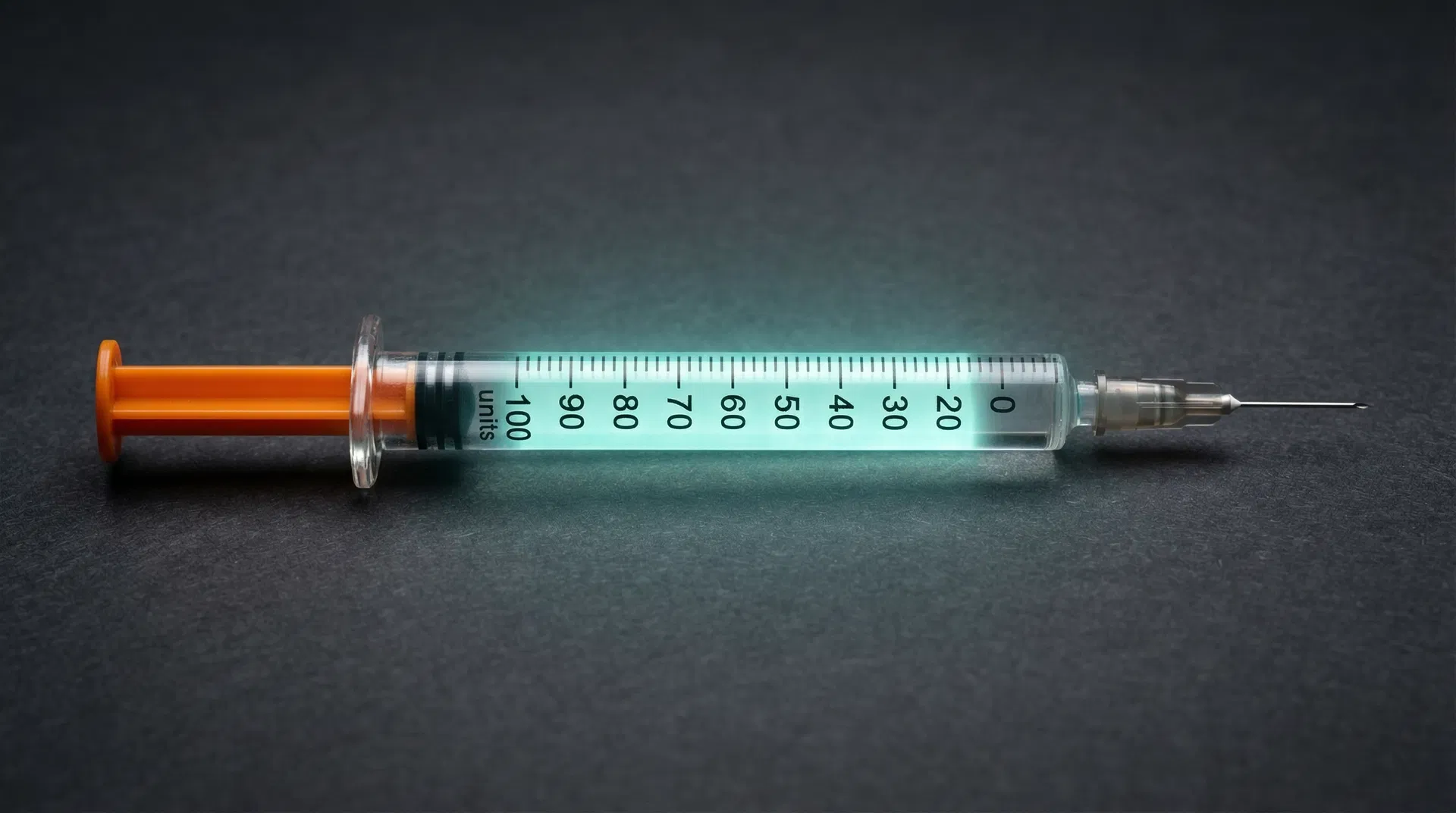
U-100 insulin syringes are the standard for peptide administration. They hold 1 mL and are marked in 100 units. Each unit equals 0.01 mL. They come in 28, 29, 30, and 31 gauge needles. A 29 or 30 gauge, 8mm needle is appropriate for subcutaneous injection. Shorter needles (4-6mm) are also suitable for most people.
Injection Technique
Most peptides are administered subcutaneously (under the skin), not intramuscularly. Pinch a fold of skin on the abdomen, outer thigh, or flank. Insert the needle at a 45-degree angle. Inject slowly. Remove the needle and apply gentle pressure with a clean swab. Rotate injection sites to prevent localised irritation.
Storage
Lyophilised (unreconstituted) peptides should be stored in a cool, dark place, ideally refrigerated. Once reconstituted, store in the refrigerator at 2-8 degrees Celsius. Most reconstituted peptides are stable for 4-6 weeks when refrigerated with bac water. Do not freeze a reconstituted peptide.
Peptide Dosing Calculator
Use the calculator below to determine your exact draw volume. Select your compound to load its typical defaults, then adjust the vial size, bacteriostatic water volume, and desired dose to match your specific vial. The syringe diagram updates in real time to show you exactly where to draw.
Peptide Dosing Calculator
For research reference only
Recovery & Repair
GH Secretagogue
Metabolic
Longevity
Cognitive
Aesthetic
Custom
Peptide vial size
Bacteriostatic water to add
Selected: 2 mL
= 250 mcg
Your Draw Volume
= 0.100 mL • 20 doses per vial
Visual Reference
Pull the plunger to 10 units on your syringe
Calculation Breakdown
Formula:
(0.25 mg / 5 mg) x 2 mL x 100 = 10 units
This calculator is for research reference only. Always verify your calculations independently before drawing. This is not medical advice.
Where Most Beginners Start
Clinical trial doses are not starting doses. They are the doses researchers used after weeks or months of careful titration in controlled settings with medical supervision. The table below shows where most experienced users actually begin, not where the literature ends up. Start here, assess your response, and escalate only if needed.
Cycle Order Calculator
Select your compound or compounds, choose your cycle length, and the calculator will tell you exactly how many vials to order. Quantities are based on beginner starter doses by default. You can adjust the dose per injection in Step 3 to match your planned protocol.
Cycle Order Calculator
How many vials do I need to order?
Recovery & Repair
GH Secretagogue
Metabolic
Longevity
Cognitive
Aesthetic
Defaults are beginner starter doses
BPC-157
0.25 mg/dose • 14 mg total needed
3vials
5 mg each • 1 mg leftover
Quantities are calculated using beginner starter doses by default. Adjust doses in Step 3 to match your planned protocol. This is a planning tool only.
Compound Reference Library
Each entry below follows the same format: mechanism, research dose range, timing, typical cycle length, and key notes. Evidence ratings reflect the current state of the published literature, not anecdotal reports. Click any card to expand its full detail. Use this section as a reference you return to, not a one-time read.
Recovery and Repair
GH Secretagogues
Metabolic
Longevity
Cognitive
Aesthetic
Protocols, Cycling, and Stacking
A protocol is a structured plan that specifies the compound or compounds, the dose, the timing, the cycle length, and the washout period. Having a written protocol before you start is not optional if you want to draw any meaningful conclusions from your research. Without it, you cannot know whether an effect you observe is real, whether it is dose-dependent, or whether it persists after the cycle ends.
Designing a Protocol
Start with a single compound. The temptation to stack multiple compounds from the beginning is understandable but counterproductive. If you start with three compounds simultaneously and observe an effect, you do not know which compound produced it. If you observe a side effect, you do not know which compound caused it. Single-compound protocols are harder to sell but much easier to learn from.
Common Protocol Templates
| Protocol | Compounds | Duration | Goal |
|---|---|---|---|
| Recovery Starter | BPC-157 alone | 8 weeks on, 4 off | Musculoskeletal repair |
| GH Optimisation | CJC-1295 + Ipamorelin | 12 weeks on, 6 off | GH pulse enhancement |
| Metabolic Research | AOD-9604 or Retatrutide | 12-16 weeks | Lipolysis research |
| Longevity Stack | Epitalon + MOTS-c | 10-20 day cycle, 2x/year | Cellular longevity |
| Cognitive | Selank or Semax | 3 weeks on, 1 off | Cognitive enhancement |
Cycling and Washout
Cycling refers to the practice of using a compound for a defined period and then stopping for a washout period before starting again. The washout period serves two purposes: it prevents receptor downregulation or desensitisation, and it gives you a baseline period against which to compare the on-cycle effects. The length of the washout period should be at least half the length of the cycle for most compounds.
Stacking Considerations
If you choose to stack compounds, do so with a clear rationale for why the combination makes sense mechanistically. The CJC-1295/Ipamorelin combination is the canonical example of a well-reasoned stack: one compound stimulates the GHRH pathway, the other stimulates the ghrelin pathway, and the two pathways work synergistically to produce a larger GH pulse than either compound alone. The BPC-157/TB-500 combination is another well-reasoned stack: BPC-157 acts locally, TB-500 acts systemically, and the two complement each other for widespread repair.
Sourcing, Quality, and COA Literacy
The quality of the compound you are researching determines the validity of your results. A peptide that is 80% pure, mislabelled, or contaminated will not produce the effects described in the literature. Sourcing is not a peripheral concern. It is central to the entire enterprise.
What a COA Is
A Certificate of Analysis (COA) is a document from a third-party laboratory that reports the results of testing on a specific batch of a compound. A legitimate COA will include the compound name and batch number, the testing laboratory's name and accreditation, the test date, the purity result (expressed as a percentage), the testing method used (HPLC is standard), and the identity confirmation (mass spectrometry).
How to Read a COA
The two most important numbers on a COA are the purity percentage and the identity confirmation. Purity above 98% is considered pharmaceutical grade. Purity between 95-98% is acceptable for research purposes. Anything below 95% should raise questions. The identity confirmation (typically via mass spectrometry) confirms that the compound is actually what the label claims it is, not a different peptide or a completely different substance.
Vendor Evaluation Checklist
| Criterion | What to Look For |
|---|---|
| COA availability | Batch-specific COAs from named third-party labs, publicly accessible |
| Testing method | HPLC for purity, MS for identity confirmation |
| Lab accreditation | ISO 17025 or equivalent |
| Purity threshold | 98%+ preferred, 95%+ acceptable |
| Batch traceability | COA batch number matches product batch number |
| Community reputation | Verified reviews on independent forums |
Storage and Handling
Lyophilised peptides are relatively stable at room temperature for short periods but should be refrigerated for storage beyond a few weeks. Once reconstituted, store at 2-8 degrees Celsius and use within 4-6 weeks. Keep vials away from light. Never freeze a reconstituted peptide. Label each vial with the compound name, concentration, and reconstitution date.
Tracking, Troubleshooting, and When to Stop
One of the most common reasons people report that a peptide "didn't work" is that they stopped too early. Most repair and recovery compounds require 4-8 weeks of consistent use before meaningful effects are observable. Tracking your baseline and checking in at regular intervals is the only way to know whether a compound is producing the intended effect.
What to Track
Before starting any protocol, document your baseline. For recovery and repair protocols, this means noting the specific injury or symptom, its severity on a consistent scale, and any functional limitations. For GH secretagogue protocols, relevant markers include sleep quality, body composition, and energy levels. For metabolic protocols, body weight, waist circumference, and where available, bloodwork including fasting glucose and lipid panels.
| Protocol Type | Baseline Markers | Check-in Frequency |
|---|---|---|
| Recovery/Repair | Pain scale, range of motion, functional test | Weekly |
| GH Optimisation | Sleep quality, body composition, energy | Bi-weekly |
| Metabolic | Weight, waist, fasting glucose, lipids | Bi-weekly |
| Longevity | Subjective wellbeing, sleep, energy | Monthly |
Interpreting Results
Peptides are not pharmaceuticals with predictable dose-response curves in every individual. Response varies based on individual biology, the severity of the underlying condition, the quality of the compound, and adherence to the protocol. If you are not observing any effect after 6-8 weeks of consistent use at an appropriate dose, consider whether the compound quality has been verified, whether the dose is appropriate, and whether the compound is the right choice for the specific research objective.
When to Stop
Stop immediately if you experience an unexpected allergic reaction (hives, difficulty breathing, significant swelling at the injection site beyond normal localised redness). Stop and seek medical advice if you experience persistent systemic symptoms such as prolonged fever, significant changes in blood pressure, or unusual neurological effects. At the end of a planned cycle, stop as scheduled regardless of whether you feel the compound is still producing effects. The washout period is part of the protocol, not optional.
A Note on Medical Supervision
The ideal scenario for any serious research protocol is one conducted with the knowledge and oversight of a qualified healthcare professional who is familiar with the peptide research space. An increasing number of functional medicine physicians, sports medicine doctors, and longevity-focused practitioners are familiar with this area. If you have access to one, involve them. If you do not, at minimum ensure that your baseline bloodwork is current and that you have a clear plan for what to do if something unexpected occurs.
You've Reached the End
Share this guide with someone who needs it.
The PDF version includes everything in this guide plus printable protocol templates, a COA anatomy diagram, and a quick-reference dosing card.
Get the PDF VersionThis guide is for research and informational purposes only. All compounds discussed are research chemicals not approved for human use. Nothing in this guide constitutes medical advice. Always consult a qualified healthcare professional.